

Reviewed · HISTORICAL TOURS
Da Nang War Tour History: Spanish-French Attack to American Base
Da Nang’s war story stretches from the Champa kingdom and the 1858 French-Spanish attack to the American military base of the Vietnam War. This private day tour connects old citadels, mountain viewpoints, military sites, cemeteries, temples, and Cham art in one long circuit.
I like the way the tour joins military history with Da Nang’s scenery, rather than keeping you inside a museum all day. I also like the private format, which gives your group a guide, car, and room to ask questions. The drawback is the pace: five major stops over 9 to 10 hours can feel full, and several sites involve walking or steps.
Key points to know before booking
- The 1858 attack is the tour’s main thread: Dien Hai Citadel, Hai Van Tower, and the Spanish Cemetery help explain the first French and Spanish military action in Da Nang.
- Son Tra adds Vietnam War history: You visit the former American radar site, known as the Magic Eyes of Indochina, and a former landing zone with a helicopter airport.
- Marble Mountains is more than a viewpoint: Expect caves, temples, old religious sites, and a look at Da Nang’s stone-carving tradition.
- The private car matters: This is a long route with separate sites, and round-trip private transport is included according to the selected option.
- The cultural stops broaden the day: Lady Buddha and the Cham Sculpture Museum keep the tour from becoming only a military study.
- At $29 per person, value depends on group size: The price is attractive if several people share the private vehicle, but confirm which entrance tickets are included in your chosen option.
Why Da Nang’s war story needs a full day
Da Nang is often sold as a beach city with a famous bridge and easy access to Hoi An. That is only part of the picture. Its position beside the sea, the Han River, mountain passes, and the old route toward Hue made it a prize for armies and kingdoms.
The tour begins with the wider story. The Champa kingdom shaped central Vietnam for centuries, and later conflicts involved North Dai Viet and South Dai Viet. In 1858, French and Spanish forces attacked Da Nang. The city later became a major American base during the Vietnam War.
I find this broad time span useful because it prevents the usual mistake of treating the Vietnam War as the only important conflict here. You move between Hindu sculpture, imperial defenses, colonial war, and modern military history. The result is a day about changing power, not just battle sites.
Because this is a private activity, only your group participates. That is helpful when you want to stop for photographs, ask for more explanation, or spend less time at a site that does not hold your interest. The guide is an important part of the experience. Hung Le is identified as a guide who explains Vietnamese history with patience and enthusiasm, though the exact guide for your booking should be confirmed.
More heritage trips in Da Nang:
- Hue Culture & History Day Tour – Departing Hoi An or Da Nang
★ 5.0 · 26 reviews - My Son Sanctuary And Hoi An Heritage Full-day Tour
★ 4.5 · 25 reviews - Da Nang: Full-day My Son Sanctuary And Hoi An Heritage Tour
★ 4.8 · 21 reviews
Marble Mountains: caves, temples, and stone carving
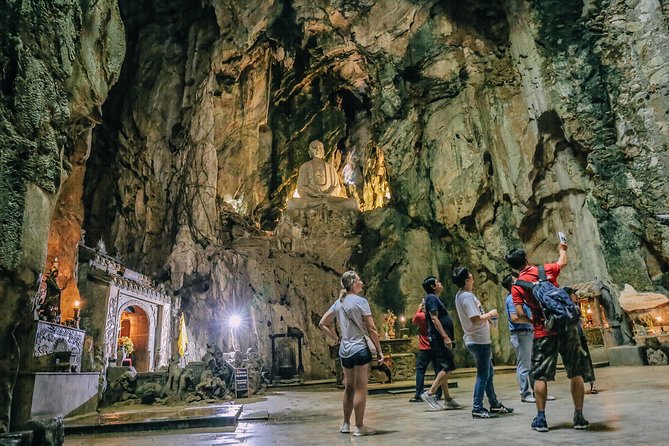
The Marble Mountains take about two hours and provide the tour’s most varied opening stop. You can expect caves, temples, and religious sites built into or around the mountain, along with views across the area.
This is not a military site in the narrow sense, but it gives you the cultural setting for the rest of the day. The caves and temples have been used for centuries, and the mountain is also tied to Da Nang’s stone-carving craft. The tour includes a chance to learn about sculpting activity, which adds a hands-on cultural angle to the visit.
I like starting here because it gives you something visual and physical before the more serious war sites. Inside the caves, light, stone, and religious sculpture create a very different mood from the radar station or cemetery later in the day.
Plan for walking and steps. The supplied information does not give a precise step count or mobility rating, so you should ask the operator about the route if stairs are a concern. Most people can take part, but the day is not designed as a no-walking excursion.
Hai Van Pass and the tower built to guard Hue
The tour spends about two hours at Hai Van Pass, including Hai Van Tower. The site helps explain why access from Da Nang toward Hue mattered so much. The tower was built by the An Nam kingdom to help stop a French attack on Hue during the 1858 conflict.
This is one of the tour’s best history lessons because the location explains the strategy. A mountain pass is not just a pretty road. It is a natural route between regions, and a fortification here could control movement toward the imperial capital.
You also learn how to reach the peak. That detail suggests the stop is meant to be more than a quick roadside photograph. You should get a chance to understand the position of the tower and the route around it, though the exact walking conditions can change with weather and access.
Hai Van Pass is also the scenic break in the day. The views are a welcome contrast to the enclosed caves and later military installations. Keep your expectations practical: the tour combines scenery with instruction, so this is not a dedicated viewpoint tour with unlimited time for photographs.
Son Tra Peninsula: radar, landing zone, and cemetery

Son Tra receives about three hours, making it the main war-history section of the day. The route includes the former American radar site, called the Magic Eyes of Indochina, and an American landing zone with a helicopter airport that served during the Vietnam War.
The radar installation is the kind of place that gives military history a physical sense of scale. You are not only hearing about American operations. You are seeing the mountain position used for surveillance and communication. The landing zone adds another layer, showing how helicopters and mountain access supported military activity.
The tour also brings you down the mountain to the Spanish Cemetery. The site is linked to roughly 400 Spanish and French dead from the Indochina conflict. This is likely to be one of the quieter and more reflective stops, especially after the technical story of radar and helicopter operations.
The description also refers to Red Beach 2 and My Khe Beach, both connected with the Vietnam War. It does not list them as separate timed stops, so treat them as places you may hear about rather than guaranteed visits. That distinction matters if you are booking specifically to walk on those beaches.
Son Tra is a large part of the day, and the route may not feel like a polished museum visit. Military remains can be spare, altered, or viewed from outside. Your guide’s explanation will shape the experience, so this is where a strong English-speaking guide adds the most value.
A very different day out of Da Nang:
- Full Day Golden Bridge and Ba Na Hills Small Group Tour
★ 5.0 · 2,369 reviews - Morning Small group to Marble Mountains – Am Phu Cave – Monkey Mountain
★ 5.0 · 1,097 reviews - Da Nang: Ba Na Hills and Golden Bridge Tour
★ 5.0 · 938 reviews - Da Nang & Hoi An: Food, Sightseeing, Culture & Hidden Gems
★ 5.0 · 806 reviews
Lady Buddha: a change of pace on Son Tra
Lady Buddha takes about an hour at Bai But Pagoda Complex. The statue rises 67 meters and is one of the tour’s major cultural and visual stops.
After the radar site and cemetery, this visit changes the tone. You move from military power to Buddhist devotion, with the statue providing a clear landmark on Son Tra. The stop also helps you see how the peninsula functions today, not only as a former military position.
The tour includes the entrance ticket for Lady Buddha. As with any pagoda visit, dress and behavior should be respectful, even though the supplied information does not set out a formal dress code. Give yourself time to look beyond the statue itself. The value here is the setting, the religious complex, and the contrast with the war sites nearby.
If your main goal is military history, you may consider this stop less essential than Son Tra’s radar station. If you want a fuller picture of Da Nang, it earns its place.
Cham Sculpture Museum: the older story behind the city
The final listed stop is the Da Nang Museum of Cham Sculpture, with about one hour inside. The museum holds about 250 Hindu sculptures connected with the Champa kingdom, dating from the second through the seventeenth centuries in central Vietnam.
This is an excellent way to close the historical arc. Before French forces, American forces, and modern Vietnam, Champa shaped the region’s religion, art, and political identity. The stone figures make that early period easier to grasp than a short explanation in the car.
I would pay close attention to the Hindu imagery and the age range of the collection. The museum gives context to the opening discussion of Champa and keeps the tour from presenting Vietnamese history only through foreign military action.
An hour is enough for a useful visit, but not for a slow museum study. If you are especially interested in art, ask whether the schedule can allow extra time here. The five-stop route has a fixed feel, and the operator notes that not every possible site can fit into one day.
What the $29 price really gives you

At about $29 per person, this is an appealing price for a long private tour, especially if your group can use the vehicle together. You are paying for a full day of transport, a private English-speaking guide, mineral water, and access to several spread-out places.
The important catch is the options menu. Marble Mountains, the Cham Museum, military museum entry, Hai Van Tower, and the American landing zone are listed as included depending on the selected option. Do not assume every ticket is covered at the base price. Check the exact package before paying.
Meals are not included, and neither are tips, personal expenses, or travel insurance. Since the tour lasts 9 to 10 hours, you should plan for food costs even though no meal stop is specified. The private car is the main value here. Arranging this circuit independently would require separate transport and a strong grasp of the sites.
The group discount feature may improve the price for larger parties. For one person, the cost is still reasonable for the route, but the private format makes the strongest financial sense when two or more people share it.
Timing, comfort, and the kind of day to expect
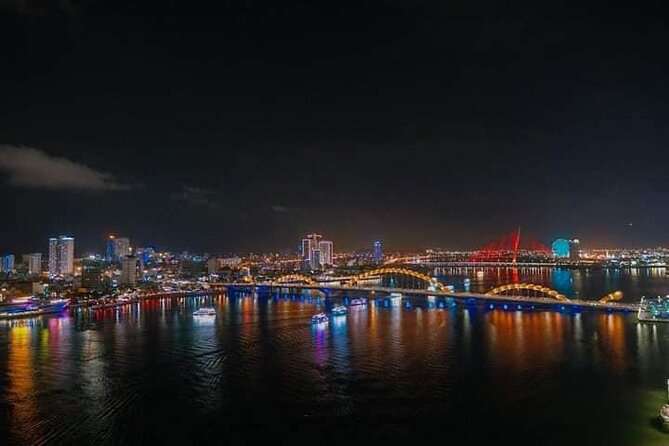
This is a serious full-day outing, not a relaxed city loop. Marble Mountains takes two hours, Hai Van Pass another two, Son Tra three, Lady Buddha one, and the Cham Museum one. Allowance for driving, traffic, photographs, and transitions is built into the advertised 9 to 10 hours.
Pickup is offered, and transport is by modern private car under the selected option. That is useful in Da Nang, where the sites are separated by city roads, mountain roads, and the pass toward Hue.
Bring water, sun protection, and comfortable shoes. Mineral water is included, but meals are not. Weather matters too. The operator can cancel in poor weather and offer another date or a full refund. You can also cancel for a full refund up to 24 hours before the start time. Changes made inside 24 hours are not accepted, and late cancellations are not refunded.
The tour requires a minimum number of participants, despite being private for your group. If that minimum is not met, you are offered another date, another experience, or a full refund.
Who will get the most from this tour?
I would recommend it to you if you want a guided historical framework rather than a simple sightseeing drive. It suits people interested in colonial conflict, the Vietnam War, Champa art, Buddhist sites, and the way geography shapes military decisions.
Families and small groups may also like the private structure. A guide can adjust explanations and help with photographs. One review specifically praises Hung Le for taking time with questions and photographs, which is useful if you want both learning and a record of the day.
You should think twice if you prefer a slow visit to one or two places. The route is ambitious, and the number of stops means each one has a set window. It may also be a poor fit if you want a dedicated food tour, since meals are not provided, or if you need a fully step-free day.
The tour has a listed five-star rating from 13 reviews and a 100 percent recommendation figure. Those numbers suggest strong satisfaction, but the sample is small. The more useful takeaway is the consistent praise for friendly guiding, clear historical explanation, good organization, and help with photographs.
Should you book the Da Nang War Tour?
Book it if you want Da Nang explained through its conflicts, cultures, and strategic locations, all with private transport. The strongest parts are Son Tra’s radar and landing zone, Hai Van Tower, and the way the Cham Museum gives the story an older beginning.
Before booking, confirm the exact ticket package, your pickup details, and which guide will lead the day. If you want a focused military tour, ask how much time will go to Lady Buddha and the Cham Museum. If you want a balanced introduction to Da Nang, the full mix is the point.
At $29 per person, it is good value for a long private circuit, provided you are comfortable with the packed schedule and extra meal costs. Choose it for context and variety, not for a lazy day.
FAQ
How long does the Da Nang War Tour last?
The tour lasts approximately 9 to 10 hours.
Is hotel pickup available?
Pickup is offered as part of the experience.
Is this a private tour?
Yes. Only your group participates in the private activity.
What transportation is provided?
Round-trip transfer by modern private car is provided according to the selected option.
Is an English-speaking guide included?
Yes. A private English-speaking guide is included. Hung Le is identified as one guide associated with the experience.
Are entrance tickets included?
Entrance tickets for the Cham Museum, military museum, Marble Mountains, Hai Van Tower, and American Landing Zone depend on the option you select.
Are meals included?
No. Meals, tips, personal expenses, and travel insurance are not included.
Can I cancel for a full refund?
Yes. You can cancel at least 24 hours before the experience start time for a full refund. Cancellations made less than 24 hours before the start time are not refunded.
What happens if bad weather cancels the tour?
If poor weather causes cancellation, you are offered a different date or a full refund. If the minimum number of participants is not met, you are offered a different date, another experience, or a full refund.
New in Da Nang
- Transfer from Danang/Airport/Transtation to Hoi An by Private Car★ 5.0 · 9 reviews
- Da Nang Basket Boat Ride in Hoi An City with Release Lantern★ 5.0 · 3 reviews
- Walking Food Tour of Da Nang★ 5.0 · 9 reviews
- Marble Mountain -Buddha Statue -PeakMonkey Mountain -PRIVATE CAR★ 5.0 · 3 reviews
- Tasty Dinner Han River Dragon Cruise by Yatch & Tradictional Show★ 4.0 · 11 reviews
- Vietnam Central Private Package Tour★ 5.0 · 3 reviews
- Vietnam Airport Transfers★ 5.0 · 8 reviews
- Private Danang Hidden Food Walking Tours by Original Tastes★ 5.0 · 8 reviews
Historical Tours, compared.
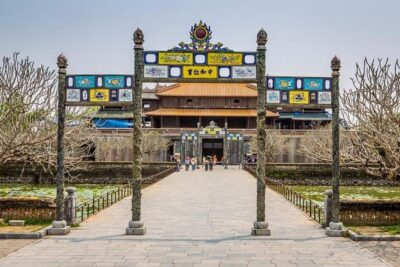
Hue Culture & History Day Tour – Departing Hoi An or Da Nang
Read our review →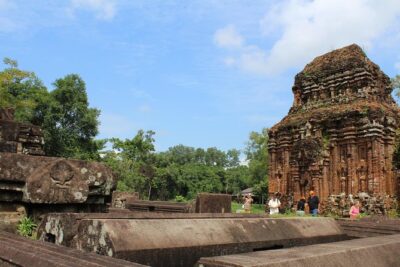
My Son Sanctuary And Hoi An Heritage Full-day Tour
Read our review →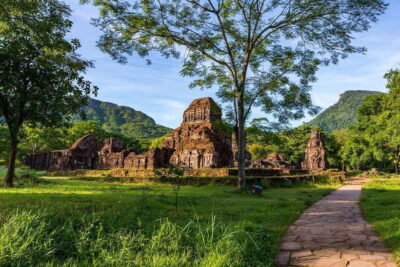
Full-day My Son Sanctuary And Hoi An Heritage Tour
Read our review →
Da Nang Epic History Tour by Cham Museum & Tasty Cuisine/Cafe
Read our review →
Charming Da Nang Show : Culture-Art-History-LifeStyle of Vietnam
Read our review →
My Son Holyland in the Early Morning-UNESSCO World Heritage Site
Read our review →Browse the lists this tour appears in