
Reviewed · WORKSHOPS
Da Nang: Tandoori Naan Bread-Making Class
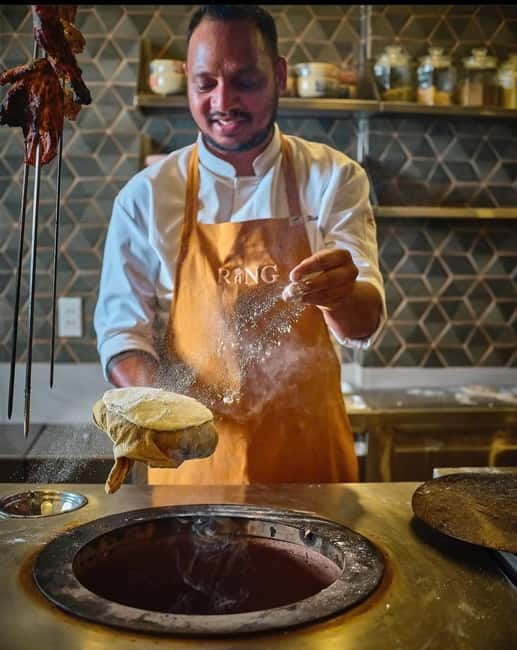
The best part of this Da Nang class is that you do not simply watch a chef make naan. You handle the dough, season it, shape it, and get the satisfying chance to slap it onto a tandoor. At RANG, chefs including Manku guide you through the process, then you eat the bread while it is still hot.
I like the small group of up to eight, which gives you room to ask questions and work at your own pace. I also like the practical home-cooking advice, especially the tips for making good naan without a tandoori oven. The main consideration is that this is a focused bread class, not a full Indian cooking course, and children under seven cannot join.
Key points to know before you book
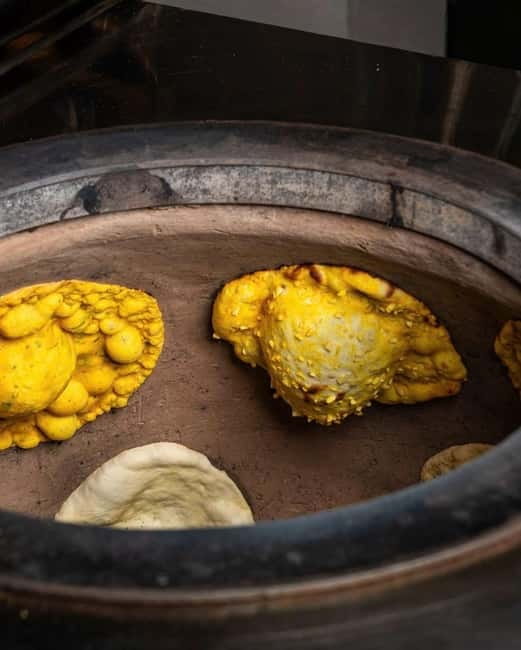
- You make the naan from start to finish: Knead dough, add seasoning, shape the bread, and bake it yourself with chef guidance.
- The tandoor is part of the fun: You can experience the traditional slap-and-bake method, with an oven alternative explained for home cooking.
- Several naan styles are possible: Learn about plain, garlic, butter, and stuffed versions such as paneer or keema.
- RANG adds useful food context: The chefs explain naan’s place in Indian cooking, from Punjabi meals to Delhi’s royal kitchens.
- The small group keeps it personal: With no more than eight participants, the class feels hands-on rather than like a demonstration.
- Fresh bread and dips are included: You finish by tasting your naan with signature dips, while a restaurant meal can be added separately if you wish.
Starting at RANG, Da Nang’s Indian kitchen
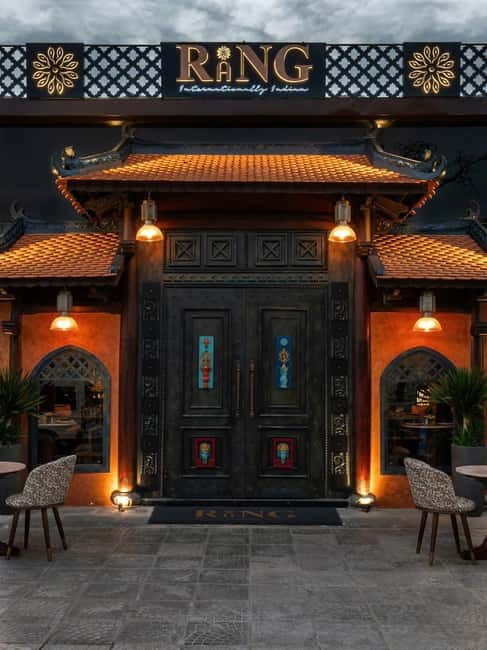
The class takes place at RANG, an international Indian restaurant in Da Nang. This matters because you are not making naan in a detached classroom with a batch of pre-prepared dough. The activity happens in a real restaurant kitchen, where the cooks are also preparing food for the dining room.
That setting gives the class a useful sense of place. You can see how naan fits into a working Indian restaurant, rather than treating it as a one-off craft project. The kitchen is described as clean and professional, and the restaurant itself has received the MICHELIN Bib Gourmand in both 2024 and 2025.
A Bib Gourmand recognizes good-quality food at moderate prices. It does not mean the class is a formal Michelin cooking school. It does mean RANG is a sensible place to learn about Indian bread, since the restaurant has a strong reason to care about the final product.
The meeting point is the restaurant itself, so you should plan to arrive ready to cook. The exact start time depends on availability, and the activity is listed as lasting one day. In practice, the useful thing to check is the available session time when you book, since the supplied details do not give a precise number of class hours.
More classes and workshops in Da Nang:
- 5 Dishes Cooking Class with Market Trip in Da Nang
★ 5.0 · 466 reviews - Da Nang Authentic Home Cooking Class
★ 5.0 · 354 reviews - 5 traditional dishes Da Nang cooking class with market trip
★ 5.0 · 331 reviews
From flour and dough to the first bake
The class begins with the basic dough work. You knead the mixture under chef guidance and learn how the texture changes as the dough comes together. This is a simple stage, but it is where much of the final bread is decided.
You should expect to get your hands involved. This is not a lecture about naan, and you will not need previous cooking experience. The instructions are aimed at beginners, with the chefs showing you how to work the dough and helping when shaping becomes awkward.
The class also explains what makes naan different from other flatbreads. You learn why it is soft and fluffy, how seasoning affects the taste, and why it pairs so well with curry. The goal is not just to give you a recipe. It is to help you understand the few steps that make homemade naan taste closer to restaurant bread.
The group size helps here. With a maximum of eight people, you have a better chance to receive direct help than you would in a large demonstration class. If your dough is too sticky, your shape is uneven, or your first attempt looks more like a map than a flatbread, the chef can step in.
Learning the traditions behind naan
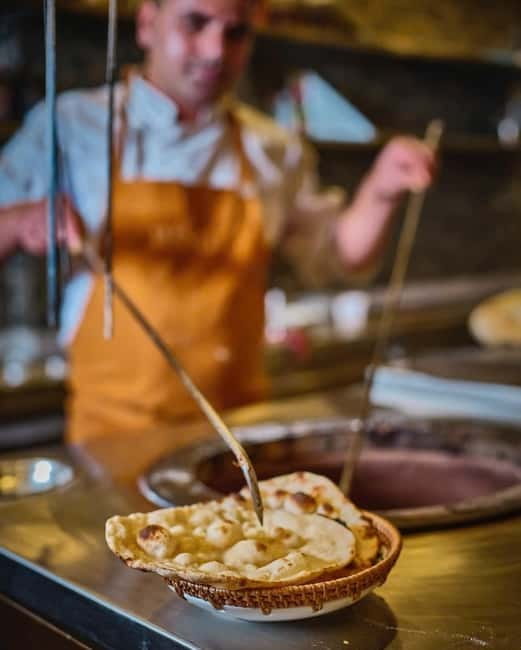
Naan is more than a side dish placed beside a curry. The class gives you a short introduction to its place in Indian food culture, including its links with hearty Punjabi meals and royal feasts in Delhi.
That context is useful because naan is often treated as a single standard item outside India. At RANG, you learn that the bread can change with its toppings, filling, cooking method, and the meal around it. Plain naan is only the starting point.
The chefs also discuss variations such as garlic naan, butter naan, and stuffed naan. Paneer and keema fillings are included among the examples. You may not make every possible version during the session, so check the available class details on your chosen date, but the instruction gives you ideas for adapting the method at home.
I like this part because it links technique with eating. You are not just learning how to produce a round piece of bread. You are learning why certain flavors work with curries and dips, and how a simple dough can become several different dishes.
The language support is another practical benefit. Instruction is available in English, Vietnamese, and Hindi. That gives you a fair chance to follow the class clearly and ask about ingredients or methods in a language you understand.
Slapping naan onto the tandoor
The most memorable step is the baking. Traditionally, naan is stretched and slapped onto the inside wall of a hot tandoor, where it cooks quickly and develops its familiar charred patches.
The class gives you the chance to try this method with guidance. It is a small physical skill, and your first piece may not be perfectly shaped. That is part of the appeal. The cooking method feels different from rolling dough onto a baking tray, and you can see how heat changes the bread in seconds.
The kitchen environment also adds some realism. Other chefs may be preparing restaurant dishes nearby, so this is not a silent practice room. You are working in the same kind of professional kitchen where naan is made for diners.
Safety and timing matter around a hot tandoor, so follow the chef’s instructions closely. The provided information does not specify the exact equipment setup or the amount of time each person gets at the oven. The important point is that you receive guidance rather than being left to handle the baking alone.
You also learn an oven method for home use. Most people do not have a tandoor waiting in the kitchen, and this advice keeps the class practical after your holiday. The home technique will not be identical to a traditional tandoor, but it gives you a way to repeat the recipe with ordinary cooking equipment.
A very different day out of Da Nang:
- Full Day Golden Bridge and Ba Na Hills Small Group Tour
★ 5.0 · 2,369 reviews - Morning Small group to Marble Mountains – Am Phu Cave – Monkey Mountain
★ 5.0 · 1,097 reviews - Da Nang: Ba Na Hills and Golden Bridge Tour
★ 5.0 · 938 reviews - Da Nang & Hoi An: Food, Sightseeing, Culture & Hidden Gems
★ 5.0 · 806 reviews
Tasting the bread while it is still fresh
Once the naan comes out of the oven, you taste it with signature dips included in the class. This is a small detail, but it is one of the best ways to understand the result. Fresh naan has a different texture from bread that has been sitting on a restaurant plate for several minutes.
You can compare the softness of the interior with the browned, slightly crisp surface. Garlic, butter, or other toppings also become easier to judge when the bread is hot. The dip gives you another point of comparison, showing how naan works as part of a larger meal.
A restaurant lunch or dinner can be combined with the class, but it is not presented as a compulsory part of the activity. That is helpful if you want only the class and tasting. If you do decide to eat at RANG, you can use your own naan with a curry, which makes a natural follow-up to the lesson.
The restaurant meal is an optional extra rather than something I would count in the $2.60 class price. Check the menu and current charges separately. The class includes the hands-on instruction, fresh naan tasting, and signature dips, but the supplied details do not say that a full curry meal is included.
What the $2.60 price really gives you
At $2.60 per person, this is an unusually inexpensive food activity. The price includes the class, chef guidance, hands-on work, freshly baked naan, and dips. Even if you are already comfortable in a kitchen, that is a low-cost way to learn a traditional baking method while in Da Nang.
The value is strongest for people who want an activity with a clear result. You are not paying only for a demonstration or a restaurant meal. You leave with a better understanding of how the dough is handled and how the bread is baked, then you eat what you made.
The price also makes it easy to combine with other plans. You might schedule it before an Indian meal at RANG, or use it as a short food-focused activity during a day in central Da Nang. Since the listed duration is one day and not a precise number of hours, check the session details before arranging transport or another timed tour afterward.
The low price should not lead you to expect a long professional culinary course. This is a beginner-friendly introduction to one staple. You learn the main process and useful home tips, but it is not designed to train you as a tandoor chef.
What people especially enjoy about the kitchen setting
The strongest feature is the friendly, hands-on atmosphere. Chef Manku and server Amit are specifically identified as key members of the team, and their role gives the class a personal face. The instruction is paired with a welcoming restaurant staff rather than delivered as a distant presentation.
The activity also takes place while the restaurant is operating. That gives you a look at the pace of a working kitchen and lets you meet the people preparing the food. For some people, this will be the most interesting part of the class.
The group remains limited to eight participants, which is a good balance. A private class would offer more personal attention, but the small-group format can be more social and keeps the price very low. You should expect to share the space and the cooking time with others, not receive a one-to-one lesson.
The experience is also suitable for first-time cooks. You do not need to know how to knead dough or shape naan in advance. The chef guidance is there to make the process approachable, and the class is designed to be fun as well as instructional.
A few limits to keep in mind
This class is centered on naan, so it may not suit you if you want to learn several Indian dishes. The focus is dough, seasoning, baking, and tasting. You will learn how naan works with curry, but the supplied details do not include instruction on making curry, paneer, or keema fillings from scratch.
The tandoor technique is exciting, but it is not the easiest method to reproduce at home. That is why the oven advice matters. You can copy the dough and topping ideas more easily than the exact restaurant baking conditions.
The class is also not open to children under seven. Families with older children should still consider how comfortable they are around dough preparation and a hot cooking area. The activity is beginner-friendly, but it remains a working kitchen rather than a child-only workshop.
Alcohol and drugs are not allowed. This is a straightforward rule, but it is worth noting if the class is part of a larger food and nightlife itinerary.
Cancellation is flexible if your plans are uncertain. You can cancel up to 24 hours in advance for a full refund, and the reserve-now, pay-later option lets you hold a place without paying immediately. Availability and starting times should still be checked for your chosen date.
Who should book this Da Nang food class?
I would recommend it most strongly to people who enjoy food activities with plenty of participation. If you like learning by doing, the kneading, shaping, and tandoor baking give the class enough action to keep it interesting.
It also suits anyone who loves Indian food but has never tried making naan at home. The home-oven advice is especially useful. You can return from Vietnam with more than a restaurant memory, since you have a method you can try in your own kitchen.
The class works well for solo visitors, couples, and small groups. The eight-person limit keeps it social without turning the session into a crowd. It also suits anyone who wants to meet local staff and learn about Indian food in Vietnam, rather than simply ordering another meal.
I would choose a different activity if you want a full-day cooking school, a market visit, or instruction in several recipes. This is a narrow class, but it handles that one subject in a direct and enjoyable way.
Should you book the RANG naan class?
For $2.60, this is an easy recommendation if you are curious about Indian food and want a practical activity in Da Nang. You make the bread yourself, learn the tandoor method, hear about naan’s place in Indian cooking, and eat the result with dips.
Book it for the personal kitchen setting, the small group, and the useful advice about baking without a tandoor. Add a meal at RANG if you want to pair your bread with curry, but do not assume that the meal is part of the class price.
Skip it only if you need a broad cooking course or prefer to spend your time sightseeing rather than working with dough. For everyone else, this is a low-cost, beginner-friendly way to turn a familiar restaurant side dish into something you understand and can attempt at home.
FAQ
How much does the Tandoori Naan Bread-Making Class cost?
The listed price is $2.60 per person. The class includes hands-on instruction, chef guidance, freshly baked naan, and signature dips.
Where does the class take place?
The meeting point is RANG, an international Indian restaurant in Da Nang, Vietnam.
How long does the activity last?
The activity is listed as valid for one day. Starting times depend on availability, so check the available session when booking.
Do I need cooking experience?
No. The class is designed for beginners, and no prior experience is needed.
What languages are available?
Instruction is available in English, Vietnamese, and Hindi.
How many people can join?
The class is a small-group activity with a maximum of eight participants.
Can children join the class?
Children under seven are not suitable for this activity.
Can I cancel or pay later?
You can cancel up to 24 hours in advance for a full refund. The reserve-now, pay-later option allows you to book without paying immediately.
New in Da Nang
- Transfer from Danang/Airport/Transtation to Hoi An by Private Car★ 5.0 · 9 reviews
- Walking Food Tour of Da Nang★ 5.0 · 9 reviews
- Da Nang Basket Boat Ride in Hoi An City with Release Lantern★ 5.0 · 3 reviews
- Marble Mountain -Buddha Statue -PeakMonkey Mountain -PRIVATE CAR★ 5.0 · 3 reviews
- Tasty Dinner Han River Dragon Cruise by Yatch & Tradictional Show★ 4.0 · 11 reviews
- Vietnam Central Private Package Tour★ 5.0 · 3 reviews
- Vietnam Airport Transfers★ 5.0 · 8 reviews
- Private Danang Hidden Food Walking Tours by Original Tastes★ 5.0 · 8 reviews
Workshops, compared.

5 Dishes Cooking Class with Market Trip in Da Nang
Read our review →
5 traditional dishes Da Nang cooking class with market trip
Read our review →
Da Nang Cooking Class with Coffee Tasting and Market Visit
Read our review →
RICE PAPER Noodle Making Experience & Hoi An Cooking Class Class
Read our review →
DaNang Farm-to-Table Cooking Class with Market and Coffee Tasting
Read our review →
Market Tour, Basket Boat Ride & Cooking Class by Hangcoconut
Read our review →Browse the lists this tour appears in