Reviewed · SHOW
Da Nang: Da Nang Charming show ticket
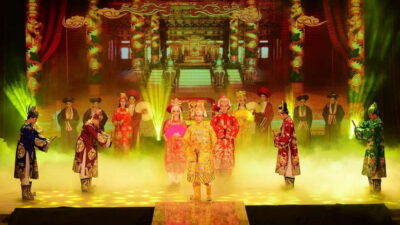
Da Nang’s Charming Show packs several Vietnamese traditions into one stage performance, moving from Cham dance to Ao Dai costumes, conical hats, a lotus dance, and the haunting sound of the dan bau. It is a brisk way to get cultural context without spending a full day at a museum.
I like the clear one-hour format and the range of art forms. I also like that the show gives the dan bau, a one-string Vietnamese instrument, its own featured solo. The main consideration is that transportation is not included, and some promotional highlights mention Dong Ba Market and the Minh Mang and Khai Dinh Tombs even though the detailed program describes a stage show only.
Key points at a glance
- Cham dance opens the program: You begin with an ancient performance linked to the Cham people of Central Vietnam.
- Ao Dai and Non La add visual drama: Traditional dresses and conical hats bring familiar Vietnamese symbols onto the stage.
- The lotus dance carries cultural meaning: Vietnam’s national flower becomes the focus of a graceful performance.
- Dan bau music provides the quietest moment: A solo on the traditional monochord offers a sharp change from dance.
- The ticket is for entry only: You need to arrange your own transport and cover personal expenses.
- The show suits a short evening plan: The stated duration is one hour, though other activity information describes the evening program as lasting a few hours, so check the exact start and finish time before booking.
What the Charming Show actually offers
I would think of this as a compact cultural theater performance rather than a sightseeing tour. You are not being driven between monuments or markets. The core experience is an evening on stage, where music, costume, movement, and Vietnamese symbols are arranged into a single program.
The purpose is to give you a broad introduction to Central Vietnam’s cultural traditions. That means you will see several different styles in a short space of time, but you will not get the same level of detail you would receive from a museum guide or a specialist lecture.
The program is operated by Truong Sa Tourism Trade Company Limited, also known as Truongsatourist. An English-speaking host or greeter is listed, which should help with arrival and basic assistance. No individual guide names are provided, so do not book this expecting a named cultural guide to accompany you throughout the performance.
The booking information gives the show a one-hour duration. A separate note describes it as an evening program that typically lasts a few hours. That wording is not fully consistent, so I would check the available starting times and the expected end time before you commit to another evening activity.
A few more Da Nang trips worth lining up side by side
- Tasty Dinner Han River Dragon Cruise by Yatch & Tradictional Show
★ 4.0 · 11 reviews - Sunrise My Son-Golden Bridge-Dragon Bridge Show & Seafood Meals
★ 5.0 · 10 reviews - Charming Da Nang Show : Culture-Art-History-LifeStyle of Vietnam
★ 4.5 · 9 reviews
The opening Cham dance
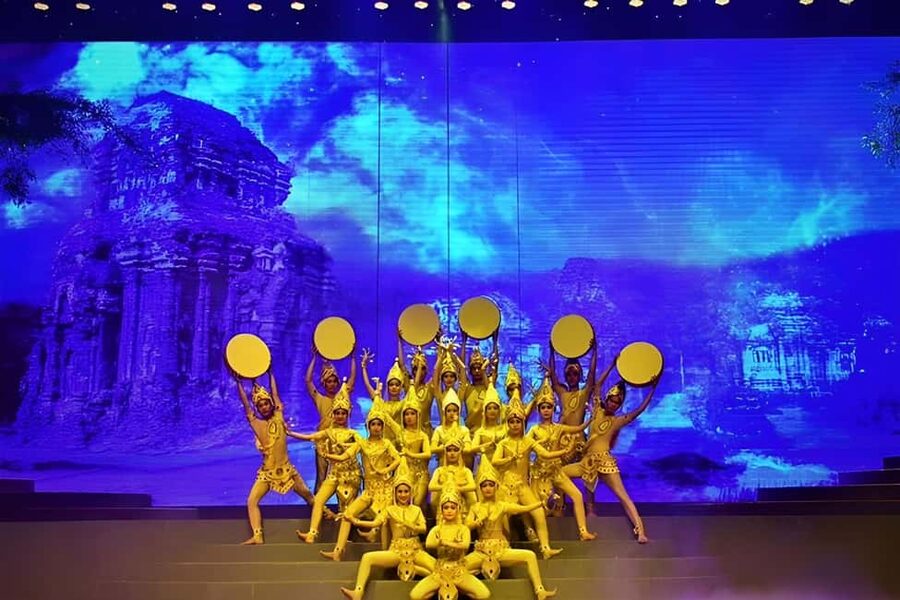
The show starts with Cham dance, an art form connected to the Cham people. This is a useful choice for an opening because it points to a part of Central Vietnam’s identity that can be missed if you focus only on imperial Hue, lantern-filled Hoi An, or modern Da Nang.
The Cham people have their own cultural traditions, and the performance offers a short visual introduction through movement. You should expect the show to communicate through choreography and costume rather than through a long spoken explanation.
I like this opening because it gives the program a regional angle. It is not simply a parade of generic Vietnamese images. The Cham element reminds you that Central Vietnam has several cultural layers, shaped by different communities and periods.
The limitation is time. A stage performance can introduce Cham culture, but it cannot explain its full background in a few minutes. If you want detailed information about Cham history, religion, architecture, or daily life, you will need another source during your stay.
Ao Dai, Non La, and the visual side of Vietnam
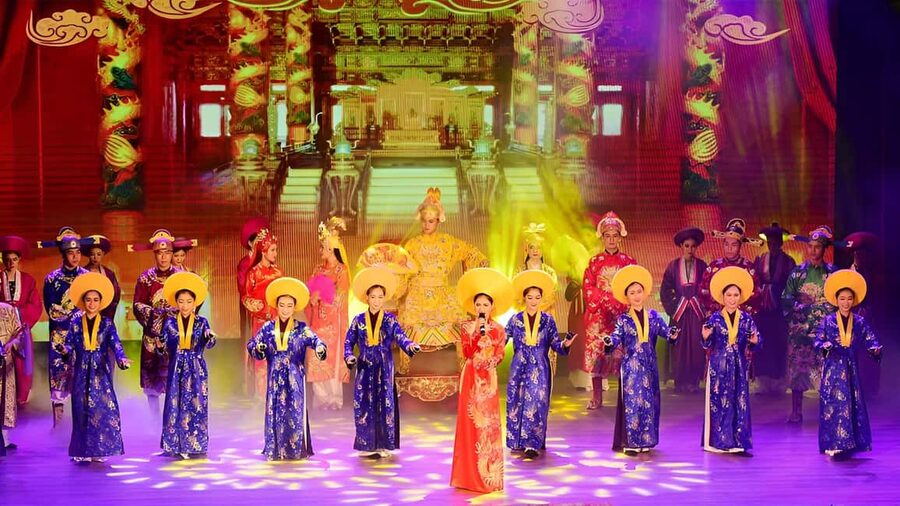
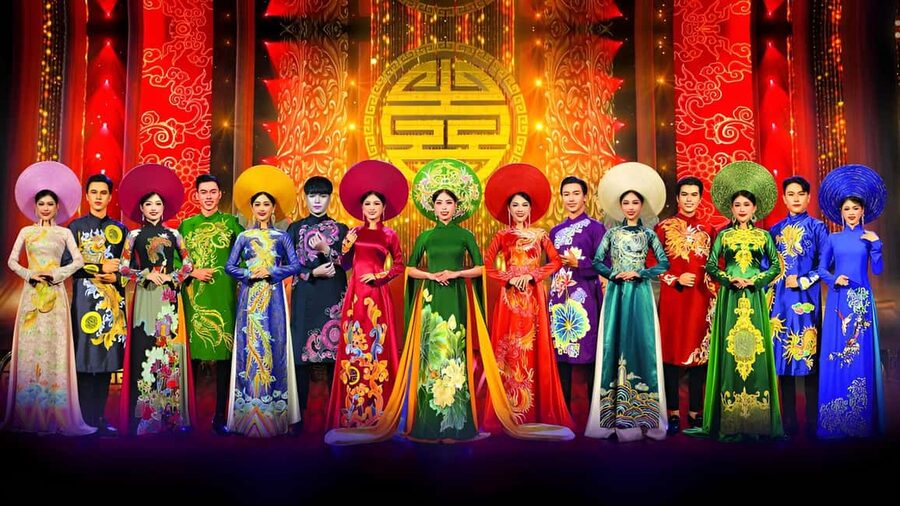
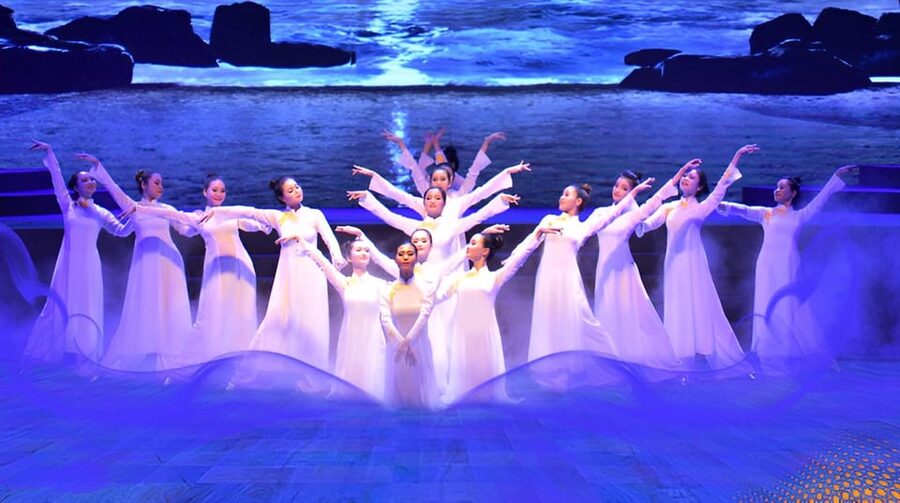
The next major feature brings Vietnamese women onto the stage in Ao Dai dresses and Non La conical hats. The Ao Dai is one of the country’s best-known traditional garments, while the Non La is an instantly recognizable symbol of rural and urban Vietnam alike.
This portion is designed for visual impact. The long dresses create clean lines as performers move, and the conical hats add shape to the choreography. It is also likely to be the part of the program that feels most familiar to first-time visitors, since these images appear in much of Vietnam’s travel culture.
For you, the value is not only photographic. Costume helps show how national identity is presented through clothing. The show places these items in a performance setting, where color, posture, and movement work together.
Photography is allowed, which is useful if you want a few images of the costumes or stage design. I would still be considerate of the performers and other people in the room. The information provided does not specify rules about flash, tripods, or filming, so keep your equipment simple unless staff tell you otherwise.
There is no stated dress code. Comfortable clothing is recommended, which makes sense for an evening performance. You do not need to dress formally unless you want to make the occasion feel more special.
The lotus dance and a national symbol
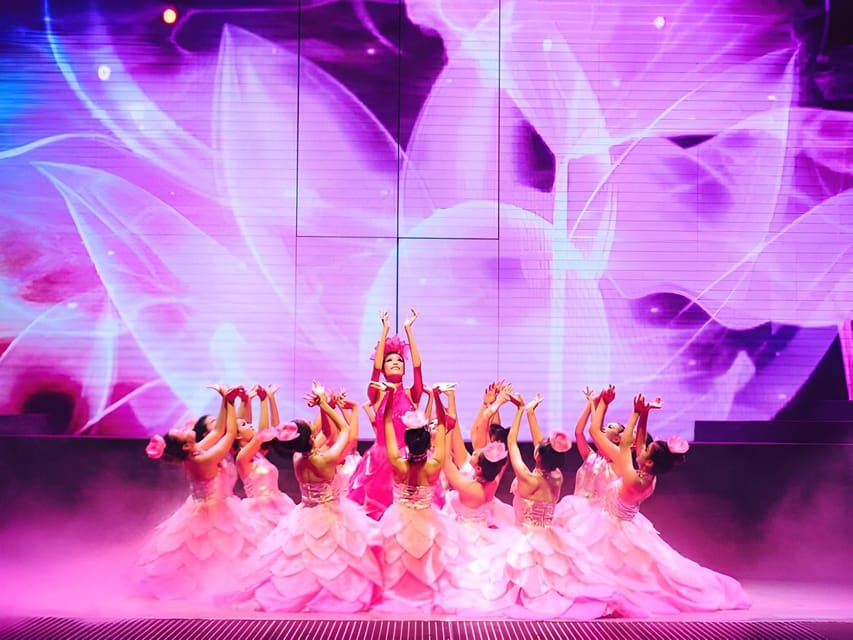
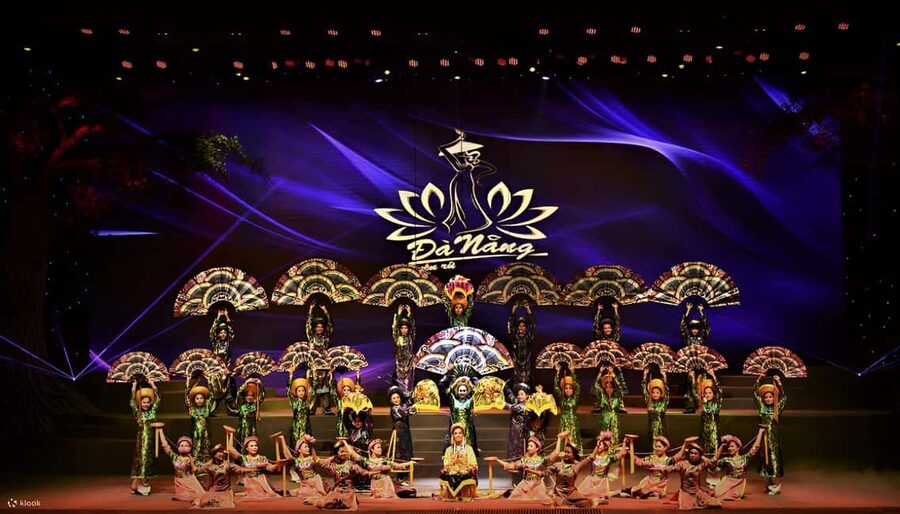
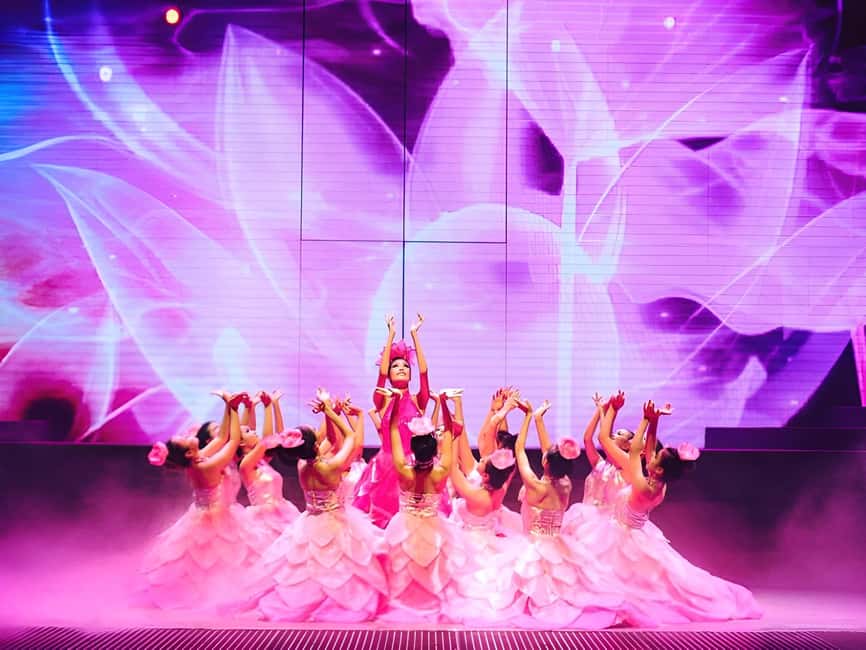
The lotus dance focuses on Vietnam’s national flower. The lotus is often linked with purity and grace, and the choreography uses those ideas as its central theme.
This section should appeal to you if you enjoy performances that use a clear symbol rather than a literal story. The meaning comes from the flower, the dancers’ movements, and the way the piece is staged. It is less about following a plot and more about watching an image take shape through dance.
I find this kind of segment helpful in a short cultural show because it gives you a simple idea to carry away. You do not need specialist knowledge to understand why the lotus matters. At the same time, the performance can prompt you to notice lotus imagery elsewhere in Vietnam, from art and temple decoration to souvenirs.
The program description does not give a running order beyond the main acts, so the exact transition between the lotus dance and the other performances may vary. You should treat the published sequence as a guide rather than a minute-by-minute schedule.
A very different day out of Da Nang:
- Full Day Golden Bridge and Ba Na Hills Small Group Tour
★ 5.0 · 2,369 reviews - Morning Small group to Marble Mountains – Am Phu Cave – Monkey Mountain
★ 5.0 · 1,097 reviews - Da Nang: Ba Na Hills and Golden Bridge Tour
★ 5.0 · 938 reviews - Da Nang & Hoi An: Food, Sightseeing, Culture & Hidden Gems
★ 5.0 · 806 reviews
The dan bau solo
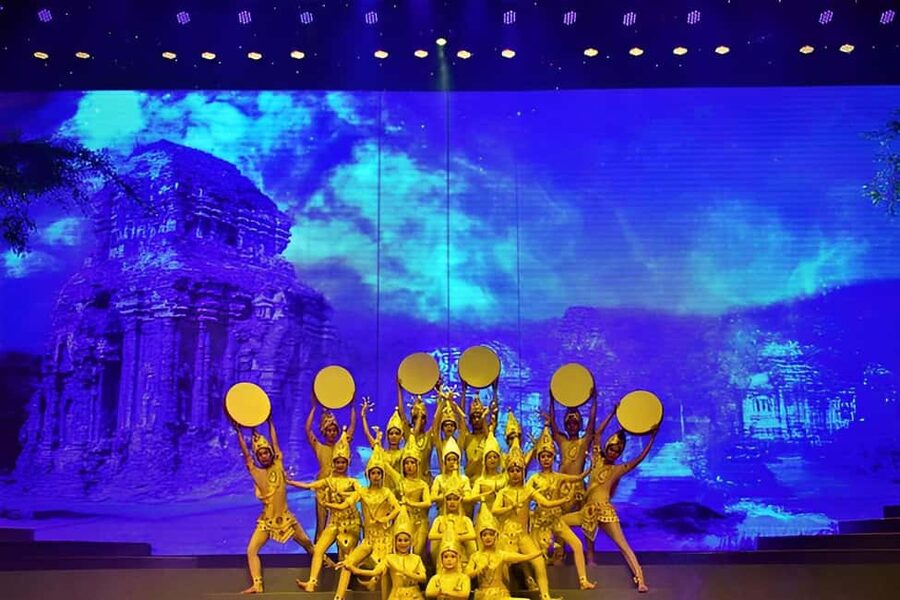
The dan bau solo is likely to be the most distinctive musical moment. The dan bau is a traditional Vietnamese monochord, meaning it uses one main string. In skilled hands, it can create a sound that feels far larger and more varied than the instrument’s simple shape suggests.
This solo changes the pace. After the movement and costumes of the dance sections, the stage becomes a place to listen. The music is described as haunting, and that is a useful clue: this is not simply background music between acts. It is intended as a focused display of musicianship.
I especially like having the dan bau included because it gives the show an audible connection to Vietnamese tradition. Dance can communicate through spectacle, but an instrument carries a different kind of memory. Even a short solo can make the program feel less like a costume presentation and more like a cultural performance.
The detailed information does not state the solo’s length, the musician’s name, or whether the performer explains the instrument before playing. You will therefore get the sound and visual experience, but not necessarily a full lesson in how the dan bau works.
What the show can teach you about Central Vietnam
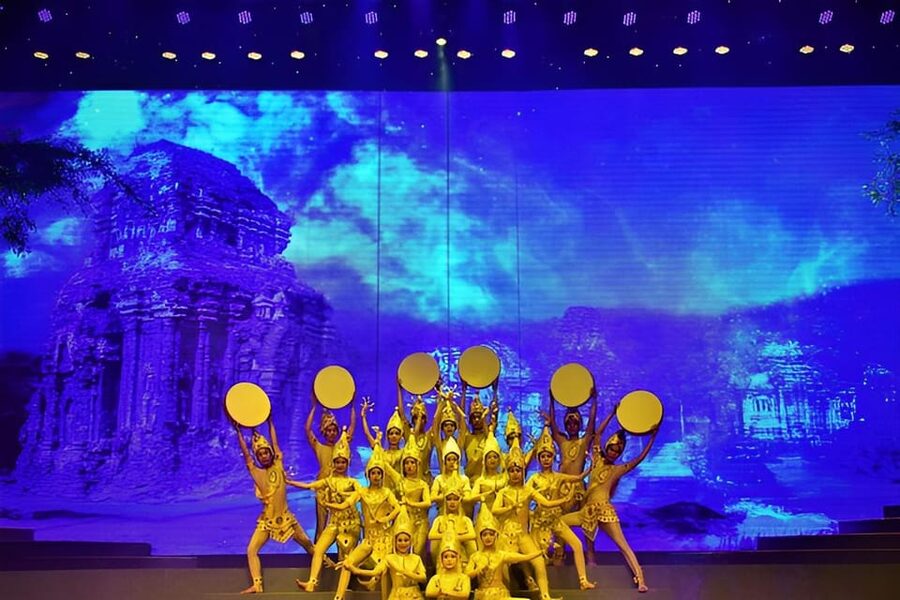
The program aims to show how Vietnamese culture has developed through different traditions. That goal is worthwhile, especially if you are spending most of your time at beaches, cafes, or modern city attractions and want an evening with more cultural focus.
The performance brings together Cham dance, Vietnamese dress, a national flower, and traditional music. These are separate elements, not a single historical story. The benefit is variety. The drawback is that the program may feel like a cultural sampler rather than a carefully explained timeline.
I would book it as an introduction. Then, if a particular element catches your interest, you can follow up with a museum visit, a historical site, or more reading. The show is best at giving you impressions and points of curiosity.
Some listed highlights also refer to haggling and taking pictures at Dong Ba Market, along with visits to the Minh Mang and Khai Dinh Tombs. Those are Hue attractions, and they are not described in the performance details. Since transportation is not included and the ticket covers entry only, I would not assume the market or tombs are part of this Da Nang booking. Confirm that point before paying if those sights are a main reason for your interest.
One hour, one ticket, and the real value
The stated price is $23 per person. At that rate, the value depends on what you want from an evening activity.
If you want a concise performance with several traditional forms, the price is reasonable. You are paying for access to a planned stage production, not for transportation, dinner, a private guide, or a full cultural workshop. The show can fill a short evening slot without requiring a long day trip.
The value is weaker if you expect a detailed guided tour or several sightseeing stops. Your ticket does not include transport or personal expenses. You will need to get to the venue yourself, and the exact meeting address is not included in the supplied details, so confirm it at booking.
The private-group label is worth noting. The information says the activity is for a private group, but it does not explain the maximum group size or how private access works inside the performance venue. Ask for clarification if a private setting is important to you.
The English-speaking host or greeter is useful for arrival. Still, do not confuse that service with a full English-language lecture. The program description promises cultural insight through performance, but it does not promise detailed commentary during every act.
Timing, comfort, and practical planning
The show is presented as an evening program. That makes it easy to add after a day in Da Nang, provided the start time works with your plans. Check availability for the exact session, since the general information does not give a fixed daily schedule.
The stated duration is one hour. Another note says the evening program typically lasts a few hours, so I would allow extra time around the performance until you have confirmed the schedule. This matters if you are arranging dinner, a transfer, or another ticketed activity.
No specific dress code applies. Wear comfortable clothes, especially if you are combining the performance with a full day out. The show is wheelchair accessible, which is a useful feature, though the information does not describe the venue layout, seating arrangement, or assistance available beyond that statement.
Photography is allowed. That makes the costume and dance sections more appealing for people who enjoy taking pictures, but the details do not state whether flash photography is restricted. Follow venue instructions once you arrive.
Cancellation is flexible: you can cancel up to 24 hours in advance for a full refund. You can also reserve now and pay later. Those terms help if your Da Nang schedule is still shifting, but you should still verify the final booking conditions shown for your chosen date.
Who will enjoy this performance most
I would recommend the show to you if you want a cultural activity that is easy to fit into a city stay. It suits first-time visitors who want an introduction to Vietnamese traditions without committing to a full-day excursion.
It also works well for families, provided everyone is happy watching a stage performance rather than taking part in an activity. The one-hour format may be easier for children than a long historical tour, though the booking details do not mention a child-specific program.
Music lovers should pay attention to the dan bau solo. People interested in costume and dance will likely get the most from the Ao Dai, Non La, Cham, and lotus sections. If you prefer detailed historical explanation, you may find the program too brief on background.
I would be more cautious if you are booking because of Dong Ba Market or the Minh Mang and Khai Dinh Tombs. Those sights are not part of the detailed show description, and the absence of transportation makes a combined Da Nang and Hue sightseeing program unlikely unless the operator confirms otherwise.
My verdict on the Charming Show Da Nang
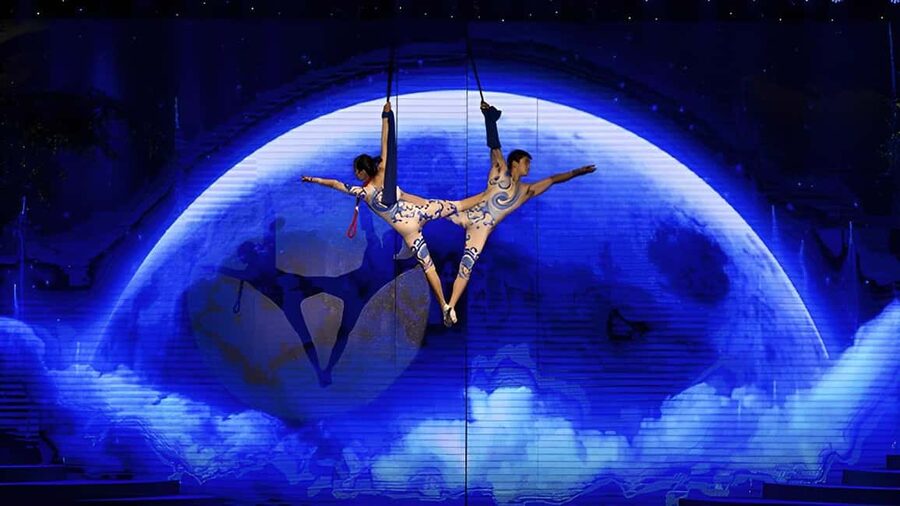
The strongest reason to book is the program’s variety. In about an hour, you get Cham dance, traditional Vietnamese dress, a lotus-themed performance, and a dan bau solo. The show has enough visual polish to feel like an evening outing, while still pointing toward real cultural traditions.
The main weakness is limited detail. You should not expect a full historical tour, a guided visit to Hue sites, or transport from your hotel. You are buying a stage performance and entry ticket, with an English-speaking host or greeter to help at the venue.
At $23, I think it is a fair choice if you want a short, organized cultural evening and understand what is included. I would book it for the performance itself, especially the Cham opening and dan bau solo. I would not book it on the assumption that Dong Ba Market, Minh Mang Tomb, or Khai Dinh Tomb is included until the operator confirms that directly.
FAQ
Where does the Charming Show Da Nang take place?
The supplied information does not provide the exact venue address. Confirm the meeting point and full arrival details when booking.
How long does the show last?
The activity is listed as one hour. Another note describes the evening program as typically lasting a few hours, so check the exact schedule and end time for your chosen date.
What performances are included?
The program includes Cham dance, an Ao Dai and Non La presentation, a lotus dance, and a dan bau solo.
Is transportation included?
No. The ticket includes entry only. Transportation and personal expenses are not included.
Is there a dress code?
No specific dress code is required. Comfortable clothing is recommended.
Can I take photographs?
Yes. Photography is allowed during the experience, though the provided information does not specify rules about flash or filming.
Is the activity wheelchair accessible?
Yes. The activity is listed as wheelchair accessible.
New in Da Nang
- Transfer from Danang/Airport/Transtation to Hoi An by Private Car★ 5.0 · 9 reviews
- Walking Food Tour of Da Nang★ 5.0 · 9 reviews
- Da Nang Basket Boat Ride in Hoi An City with Release Lantern★ 5.0 · 3 reviews
- Marble Mountain -Buddha Statue -PeakMonkey Mountain -PRIVATE CAR★ 5.0 · 3 reviews
- Tasty Dinner Han River Dragon Cruise by Yatch & Tradictional Show★ 4.0 · 11 reviews
- Vietnam Central Private Package Tour★ 5.0 · 3 reviews
- Vietnam Airport Transfers★ 5.0 · 8 reviews
- Private Danang Hidden Food Walking Tours by Original Tastes★ 5.0 · 8 reviews
Show, compared.
Tasty Dinner Han River Dragon Cruise by Yatch & Tradictional Show
Read our review →
Sunrise My Son-Golden Bridge-Dragon Bridge Show & Seafood Meals
Read our review →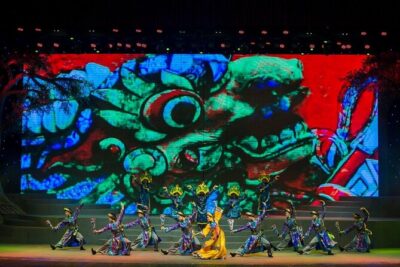
Charming Da Nang Show : Culture-Art-History-LifeStyle of Vietnam
Read our review →
Da Nang City Street Food Tour With Live Music Tien Sa Show
Read our review →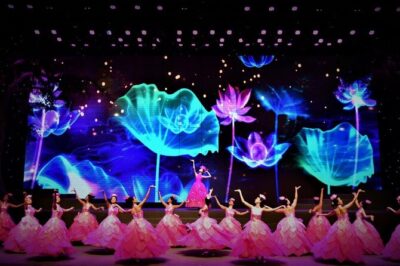
2026 Charming Da Nang Show Ticket with Hotel Pickup
Read our review →